




How one familiar kitchen appliance is being reconsidered, and what that tells us about the way we design our homes.
There are certain objects in our homes that we rarely give a second thought. The kettle is one of them.
For generations, it has occupied a familiar place on the kitchen worktop. Whether preparing the first coffee of the morning, making tea for visitors or getting dinner underway, boiling the kettle is a routine so ordinary that most of us scarcely notice it.
And yet, in an increasing number of contemporary kitchens, the kettle is nowhere to be seen.
Its disappearance is not necessarily the result of some dramatic technological breakthrough. Rather, it reflects a gradual change in what people expect from their homes, particularly when it comes to convenience, design and the small details that make everyday life easier.
Rethinking the Familiar
The traditional electric kettle is an undeniably useful invention. It is inexpensive, reliable and remarkably straightforward to operate.
But it also requires a surprisingly repetitive process.
Fill it with water, switch it on, wait for it to boil and pour. Several hours later, repeat. Depending on the household, this might happen half a dozen times or more throughout the day.
There is nothing particularly difficult about any of this. Indeed, for many people, putting the kettle on is a welcome ritual.
But modern kitchen design increasingly asks a different question: what if some of these everyday tasks could be made simpler without compromising the pleasure of using the space?
This is where boiling water taps enter the picture.
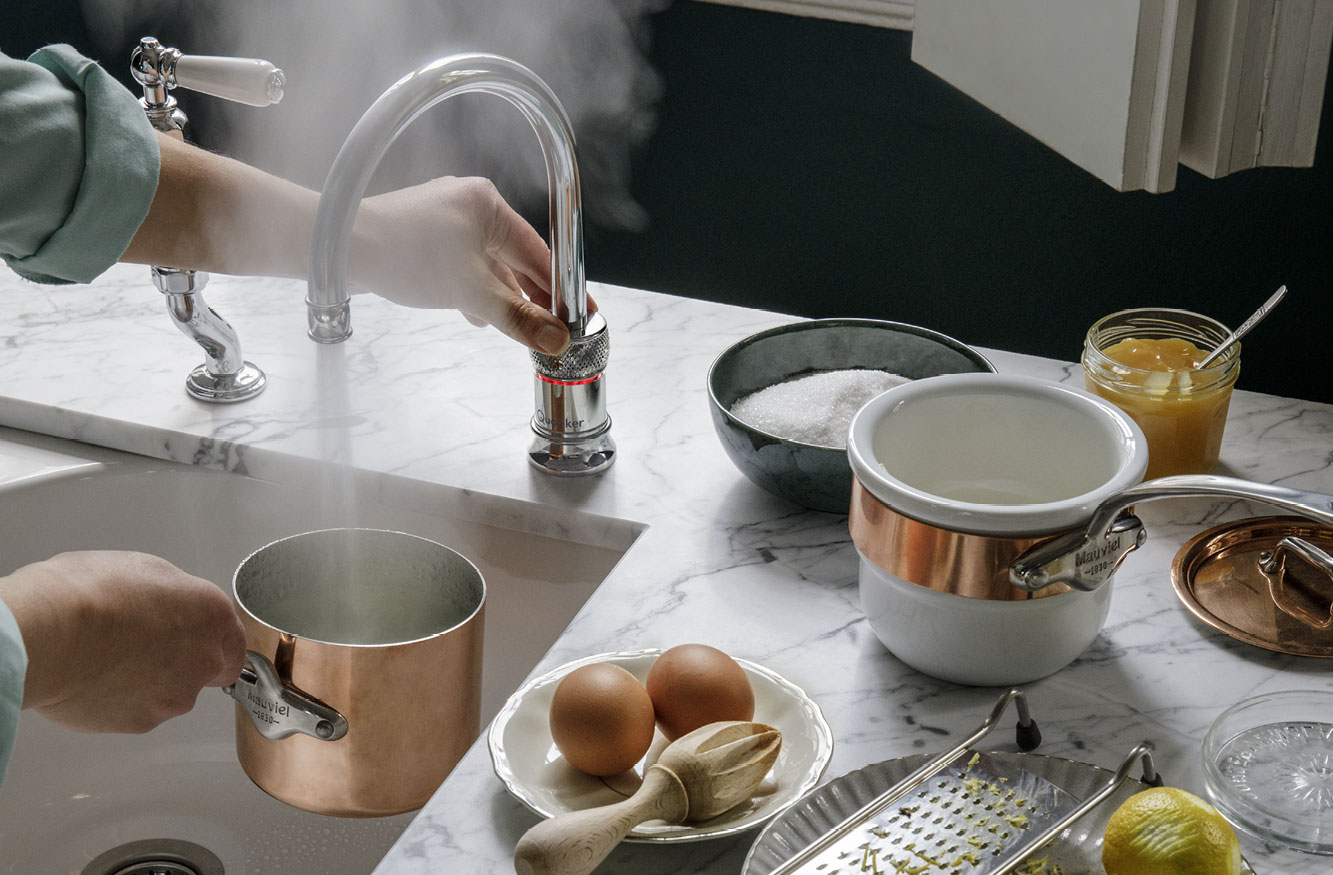
Systems such as those developed by Quooker provide boiling water directly from the kitchen tap, removing the need for a separate kettle altogether.
It is a relatively small change to the kitchen, but one that becomes surprisingly noticeable once it forms part of a daily routine.
A Kitchen That Works Around You
Consider an ordinary morning.
Perhaps you are preparing breakfast before leaving for work, or making a coffee between meetings while working from home. You might need boiling water for tea, cooking or any number of small tasks throughout the day.
With an integrated boiling water tap, there is no need to fill an appliance or wait for the water to heat. It is available when required, directly from the tap.
The benefit is not simply a matter of saving a few minutes.
It is about reducing the number of small interruptions that accumulate throughout the day.
Good residential design often works in precisely this way. The most successful features are not necessarily those that attract attention when someone first enters a room. Sometimes, they are the ones that become so natural to use that they are almost forgotten.
A well-positioned socket, intelligently planned lighting or sufficient storage can have just as much influence on the experience of living somewhere as a more obvious architectural feature.
The boiling water tap belongs to this category of practical improvements.
More Than a Question of Convenience
There is also an aesthetic consideration.
Contemporary kitchens are often designed to feel less like purely functional workspaces and more like an extension of the living environment.
This is particularly apparent in homes where the kitchen, dining and living areas occupy one continuous space.
Worktops are increasingly treated as part of the overall interior design. Cabinetry, lighting, materials and appliances are selected not only for their individual appearance, but for how they work together.
Removing a kettle can contribute to this sense of simplicity.
It frees up a little additional space, reduces visible clutter and allows the kitchen’s materials and finishes to take centre stage.
On its own, the difference might seem insignificant. Combined with carefully selected appliances, integrated storage and good lighting, however, it contributes to a kitchen that feels more organised and pleasant to spend time in.
There is something rather appealing about technology that improves a room without demanding to be noticed.
What About Energy Efficiency?
The environmental argument deserves a little more consideration.
One of the common criticisms of conventional kettles is that people frequently boil more water than they actually need. Heating unnecessary quantities of water inevitably consumes additional electricity.
A boiling water tap allows users to dispense the amount required directly, potentially reducing this particular form of waste.
However, the comparison is not quite as straightforward as it first appears.
Boiling water taps use insulated tanks to maintain a supply of hot water, and their overall energy consumption depends on the particular system, how frequently it is used and the habits of the household.
They also have higher initial purchase and installation costs than a conventional kettle.
It would therefore be misleading to suggest that installing a boiling water tap automatically makes every kitchen cheaper or more environmentally friendly to operate.
Its appeal is better understood as a combination of convenience, functionality and design, with efficiency depending on how the system is used.
Why These Details Matter in Serviced Accommodation
At Network-Inn, we pay particular attention to the practical details of everyday living.
Our residences are designed for professionals spending extended periods away from home, whether for business assignments, relocation or other commitments.
For someone staying just a night or two, the kitchen may be of relatively little importance. But over several weeks or months, having a well-equipped and comfortable space in which to prepare meals becomes much more valuable.
This is why we have chosen to incorporate Quooker taps into our residences.
The decision is part of a wider approach to furnishing and equipping our properties. Rather than simply providing the essentials, we aim to select appliances and fittings that make a genuine difference to the experience of living there.
From premium coffee machines to carefully planned kitchens and smart home technology, the objective is to make everyday tasks straightforward while maintaining the comfort and independence of a private home.
We believe that good hospitality is often expressed through these smaller details.
Guests should not have to spend their time thinking about how their accommodation works. They should be able to settle in, establish their routines and enjoy the space as they would their own home.
Is the Traditional Kettle Really Disappearing?
Probably not entirely, and perhaps it shouldn’t.
The kettle remains a remarkably practical appliance. It is affordable, portable, easy to replace and perfectly suited to millions of kitchens.
For some people, the familiar act of putting the kettle on is part of the pleasure of making tea or coffee.
There is no compelling reason to abandon something that works perfectly well.
Nevertheless, in kitchens where convenience, available space and integrated design are priorities, boiling water taps present an increasingly attractive alternative.
Their appeal says something interesting about the direction of residential design.
Innovation in the home does not always involve elaborate systems, complicated controls or technology that transforms the way we live.
Sometimes, it simply means finding a better way to perform an ordinary task.
And perhaps that is the most useful measure of a successful improvement: not how advanced it appears, but how naturally it fits into everyday life.
The kettle may not be disappearing from every kitchen just yet. But its place on the worktop is no longer quite as unquestioned as it once was.